


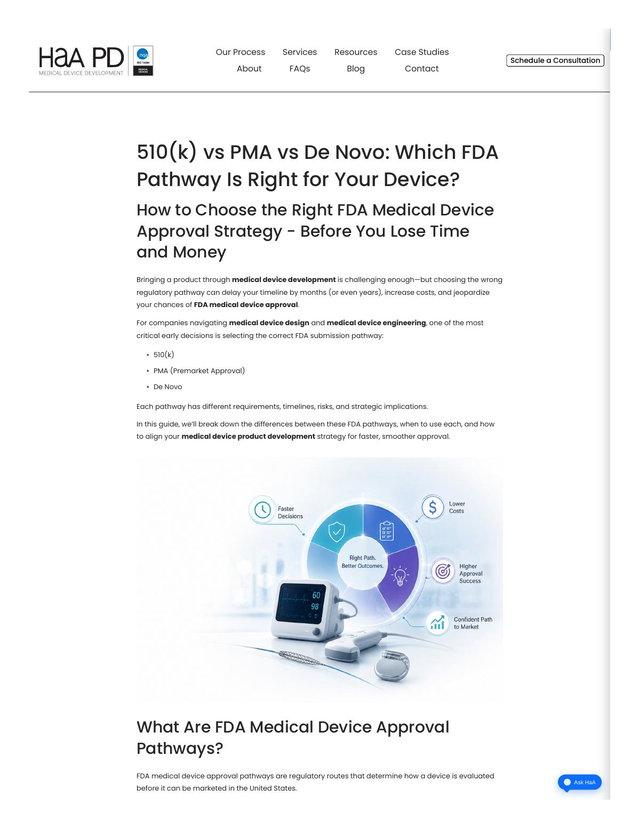
Content Summary
Access this content
Choose an option below
Your content has been opened.
Register to access this content
Verify your email to access this content
Code sent. Enter it in the modal
Your content has been opened.
Why do I need to verify I’m human?
Please verify you are a human before opening this content.
Your content has been opened.
The content will open in a new window. You may need to allow popups for this site.
Check your inbox
510(k) vs PMA vs De Novo: Which FDA Pathway Is Right for Your Device? has been emailed to . Entered the wrong email?
Don't see the content in your inbox?
Make sure to check your spam and other messages folders.
Can't get to your email right now?
By accessing content on the Medical Device Directory you agree to our Terms of Service and Privacy Policy; and, you acknowledge that your information may be shared with the content publisher.
You might also be interested in
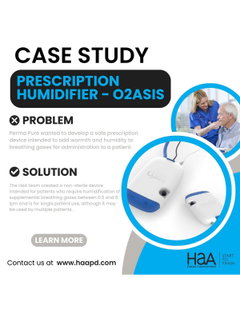
Complex Challenges? SOLVED: O2asis Personal Oxygen Humidifier Case Study Intro
HaA worked with a leading manufacturer of gas conditioning products, PermaPure to create the Prescription Humidifier. Let’s chat about the foreseeable problems with this device...
Read More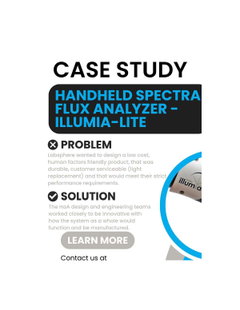
PROBLEM SOLVED: Handheld Spectral Flux Analyzer Case Study Intro
Another successful project with HaA! Let’s chat about the Illumia-Lite with Labsphere! ▪️ The problem: Labsphere came to HaA for help in designing a low cost, human factors...
Read More
Need Full Product Design? - The HaA Bear - Depicting 20+ Years of Developing Products
“Creativity is seeing what others see and thinking what no one else has ever thought.” — Albert Einstein This is how we view our work. Here at HaA we’re creating life-changing...
Read More
